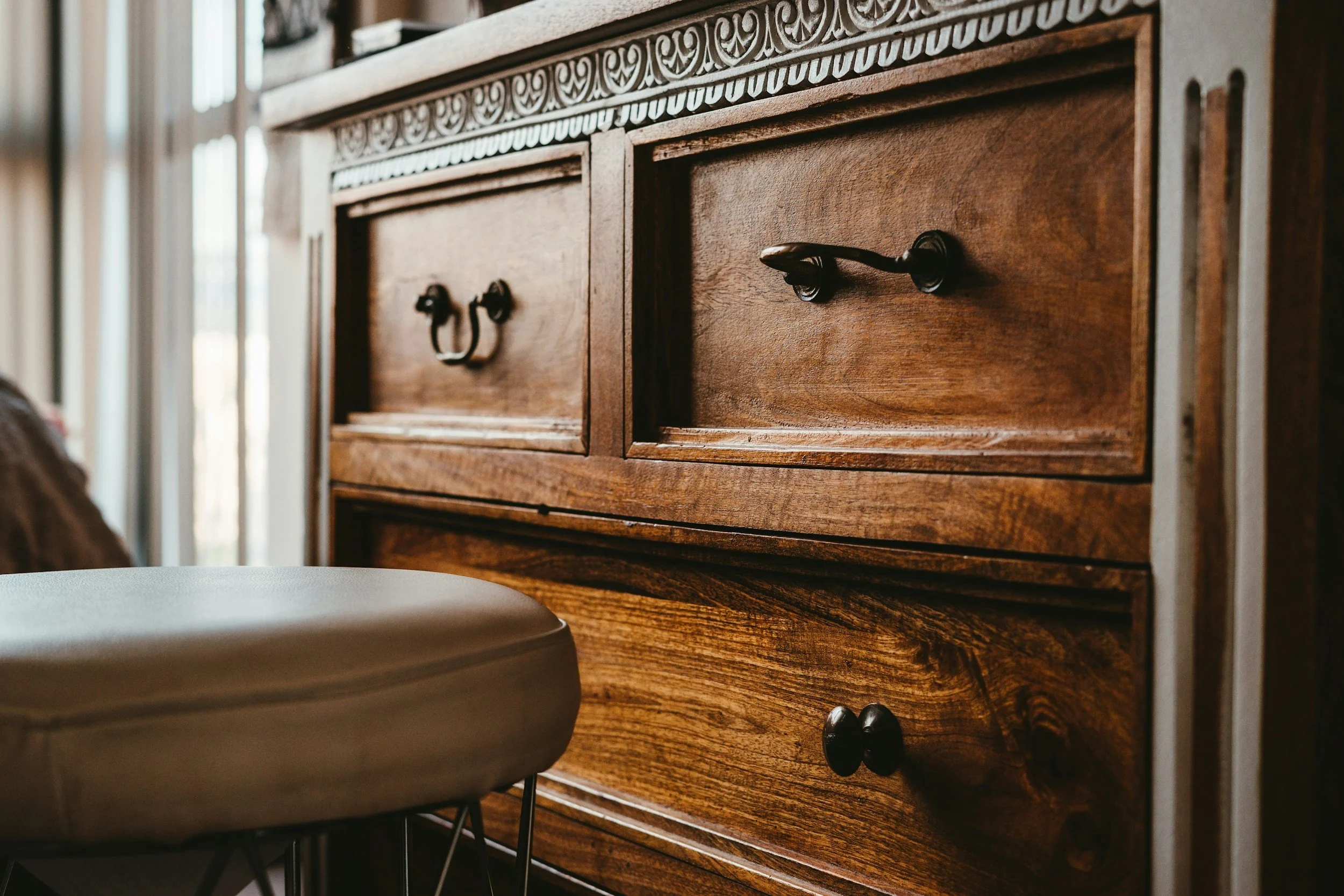
Why Oak Dominated English Furniture
For centuries, oak was the defining material of English furniture. From medieval halls to modest country homes, oak shaped tables, chests, chairs, and cupboards that were built to last generations. Its dominance was not accidental. It was the result of geography, craft tradition, social structure, and daily life. To understand English furniture, one must first understand oak.
Abundance and Geography
England’s landscape played a central role in oak’s dominance. From the Middle Ages onward, oak forests were widespread across the country. Oak was readily available, durable, and familiar to local craftsmen. Its abundance made it the practical choice for furniture long before exotic woods became accessible through trade (1).
Unlike imported timbers, oak could be sourced locally, seasoned nearby, and worked without reliance on long supply chains. This mattered in a period when furniture was made regionally and often commissioned within the same county. Oak became the natural material of English domestic life because it was there, dependable and known.
Strength and Durability
Oak is a dense hardwood with exceptional strength. Its resistance to wear, insects, and moisture made it ideal for furniture expected to endure heavy daily use. Medieval and early modern homes were not gentle environments. Furniture had to withstand damp conditions, uneven floors, and constant handling (2).
Tables were struck, benches were dragged, and chests were used for both storage and seating. Oak’s structure allowed for thick boards, sturdy frames, and lasting joints. Many surviving English oak pieces still function today, a testament to the material’s inherent resilience (3).
Craft Tradition and Joinery
English furniture-making developed alongside oak. Craftsmen learned to work with its grain, density, and limitations. Over time, a distinct tradition of joinery emerged. Techniques such as mortise-and-tenon joints, pegged construction, and panel framing became standard, all well suited to oak’s properties (1).
These methods allowed furniture to move with seasonal changes in humidity without splitting. The visible pegs and joints seen on early English furniture were not decorative choices but structural necessities. Over time, they became part of the visual language of English design.
Oak shaped not only what furniture looked like, but how it was built.
Social Meaning and Status
In early periods, oak furniture carried social meaning. Large oak tables, carved chests, and paneled cupboards signaled permanence and stability. In a society where wealth was often measured in land and lineage, oak represented continuity rather than display (4).
Unlike later mahogany furniture, which reflected global trade and rising consumer culture, oak furniture belonged to an older value system. It was associated with inheritance, durability, and family history. Furniture was expected to be passed down, repaired, and reused, not replaced.
This cultural attitude reinforced oak’s position as the material of serious, lasting furniture.
Oak and the Medieval Interior
In medieval England, furniture was sparse but substantial. Chests served multiple purposes: storage, seating, and transport. Tables were often trestle-based and dismantled when not in use. Oak was ideal for these forms because it could support weight and resist repeated assembly (2).
Carving was limited but meaningful. Linenfold panels, simple tracery, and geometric motifs added visual interest without weakening the structure. Oak’s grain allowed for shallow carving that aged well, softening rather than eroding over time.
These early forms set the foundation for centuries of English furniture design.
The Tudor and Stuart Periods
During the Tudor and early Stuart periods, oak furniture became more refined but remained dominant. As domestic interiors grew more complex, new furniture forms emerged: cupboards, dressers, joined stools, and panel-backed chairs (4).
Oak responded well to these developments. It could be framed, paneled, and carved without losing strength. Furniture from this period often shows bold proportions and strong silhouettes, reflecting both the material and the social atmosphere of the time.
Even as decorative influences from Europe appeared, oak remained the structural core of English furniture well into the 17th century.
The Gradual Shift Away from Oak
By the late 17th and early 18th centuries, oak began to share space with walnut and later mahogany. Changes in taste, trade, and technology introduced lighter, smoother woods that allowed for finer carving and thinner profiles (5).
However, oak did not disappear. It remained common in country furniture and regional workshops long after urban makers adopted new materials. In many rural areas, oak continued to be used well into the 19th century, often alongside softer woods (3).
This overlap explains why English furniture history cannot be divided neatly by material. Oak’s presence persisted, adapting rather than vanishing.
Oak in Country Furniture
Country furniture preserved oak’s legacy. Made by local craftsmen for local use, these pieces favored function over fashion. Dressers, tables, and storage furniture retained solid construction and minimal decoration (3).
These objects often show repairs, replacements, and alterations made over decades. Oak’s ability to accept repair without failure allowed furniture to evolve with changing needs. This adaptability is one reason so much oak furniture survives today.
In many ways, country oak furniture represents the purest expression of the English relationship with material and use.
Why Oak Still Matters Today
Today, oak furniture holds a special place in the appreciation of English antiques and vintage pieces. Collectors value it not for polish or perfection, but for presence. The weight, grain, and wear of oak speak clearly of time and use.
Oak tells a story of restraint, practicality, and endurance. It reflects a culture that valued making things once and making them well. In a modern context, where speed and replacement dominate, oak furniture offers a different rhythm—one rooted in patience and longevity.
Understanding why oak dominated English furniture helps us see these pieces not as relics, but as living objects shaped by centuries of daily life (1, 6).
References
Hinchman, Mark. History of Furniture: A Global View. Bloomsbury Publishing, 2016, London, UK.
Macquoid, Percy. A History of English Furniture. Vols. I–IV, first published 1904–1908, London, UK.
Chinnery, Victor. Oak Furniture: The British Tradition. ACC Art Books, 2010, Woodbridge, UK.
Gura, Judith. The Guide to Period Styles for Interiors: From the 17th Century to the Present. Fairchild Books, 2017, London, UK.
Payne, Christopher. British Furniture 1820–1920: The Luxury Market. ACC Art Books, 2013, Woodbridge, UK.
Oats, Joclyn M. An Illustrated Guide to Furniture History. Routledge, 2021, London, UK.
Our Story